My Himalayan Travels – Day 6
On day 6, I want to make the journey from Joshirmath to Badrinath and from there to the village of Mana which is the last village in the Indian side.
The route map is depicted below.

The path from Joshirmath to Badrinath is barely paved. The road is wide in parts and vanishes off for small stretches. The Sumo driver was doing everything in his power to make it even more turbulent. We followed the Alakananda to a place called Vishnu Prayag (part of the Panch Prayag) where the Dhauli Ganga rushes in to join the Alakananda in her journey down the mountains.
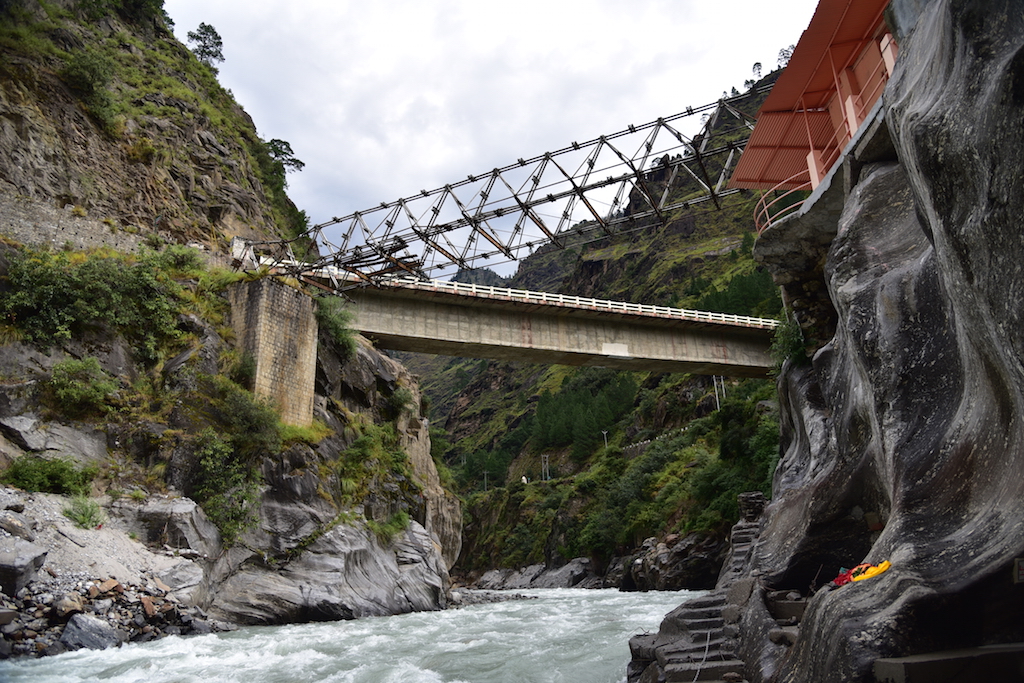
The Dhauli Ganga at Vishnu Prayag where it meets with Alakananda
After Vishnu Prayag, there is a further stop at Hanuman Chatti. This is a very small town around 15 kms before Badrinath in the highway. In this place, Hanuman vanquishes Bhima’s pride in his own strength. Bhima, one day, encounters a very old monkey in his travels in the Himalayas. The monkey was sleeping gently and its tail was on the path. In disdain, Bhima orders the monkey to step aside without blocking the route. Hanuman, for indeed it is he who is the monkey, humbly asks Bhima to cast his tail aside so that the path can be freed up. Bhima finds it impossible to move the tail despite using all his strength and learns a lesson on humbleness.

Temple of Hanuman at Hanuman Chatti.
After offering prayers at the little temple, I proceeded up to Badarikashram or Badrinath. Badrinath is a picturesque valley between the Nara and Narayana mountains. The Alakananda river which originated in the Alakagiri glacier further upstream, gurgles down and washes the feet of Shri Badri Vishal who made Badrinath his home. It was Adi Shankara who installed the idol of Shri Badri Vishal from the Narad Kund which is a small spring bordering the Alakananda. The Badri temple has survived from that time and the idol bears testament to this great visionary. The idol has lost its facial features which is probably due to the erosion that it must have encountered when submerged in the Narad Kund.
Badrinath
Nara and Narayana are twin deities who epitomize the dual concept of atma-paramatma. Nara is human while Narayana is divine. In other words, Nara is a more limited form while Narayana represents the Universal spirit. Narayana is frequently perceived as the preceptor for Nara. In Dwapara Yuga (the yuga preceding the current Kali Yuga) Nara and Narayana manifested themselves as Arjuna and Krishna. Badrinath town is strongly associated with both Nara and Narayana.
There is a story that Narada the eternal vagrant once went to Vishnu loka (Vaikuntam) and found Vishnu happily reclining on his serpent (AdiSesha) which formed a bed under him. Narada slightly admonished the Lord for having too much fun while the rest of the world is suffering from all kinds of woes especially in the Kali Yuga. Lord Vishnu took this critique seriously and came to the earth to a place where there were lots of berry trees to meditate and generally live an ascetic existence. These berries were called Badari and the place that had these huge orchards of berry trees was called Badarika vanam. (forest with berry trees) Vishnu meditated here as Narayana. Nara found his way to the same place (I don’t know how) and started meditating with Narayana. Poor Goddess Lakshmi was left alone and went in search of her husband and found him here meditating and partaking of a frugal berry diet. She (perhaps sarcastically) called him Badrinath – the king of Badri trees and the name stuck.
Be that as it may, it was indeed fortunate that Lord Vishnu found this haven since we all get to go there now. It is indeed an amazing place. The Nara and Narayana mountains protect it from both sides and the playful Alakananda river flows in between. The temple is on the left side of the river with the Narayana mountain forming an impressive backdrop.

Badri Vishal temple with the Narayana mountain at the back
The devotees generally immerse themselves into the hot water from Taptakund before entering into the main temple. The water there is supposed to have curative powers. Taptakund is pleasant to bath in while the Narad kund below is far more dangerous and laden with moss walls. People generally don’t bathe in Narad Kund.
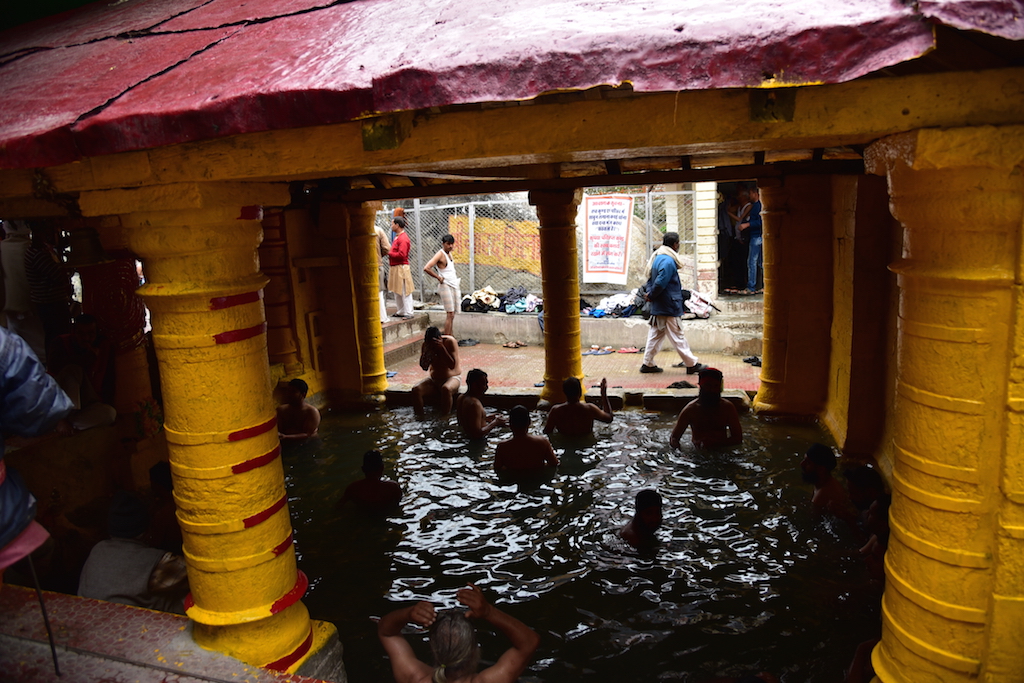
Badrinath Taptakund
There are a few shilas (or images) near the Tapt Kund. These are quite famous and people try to locate them. Half the battle is to find out which shila is which since the stone shapes are ambiguous.
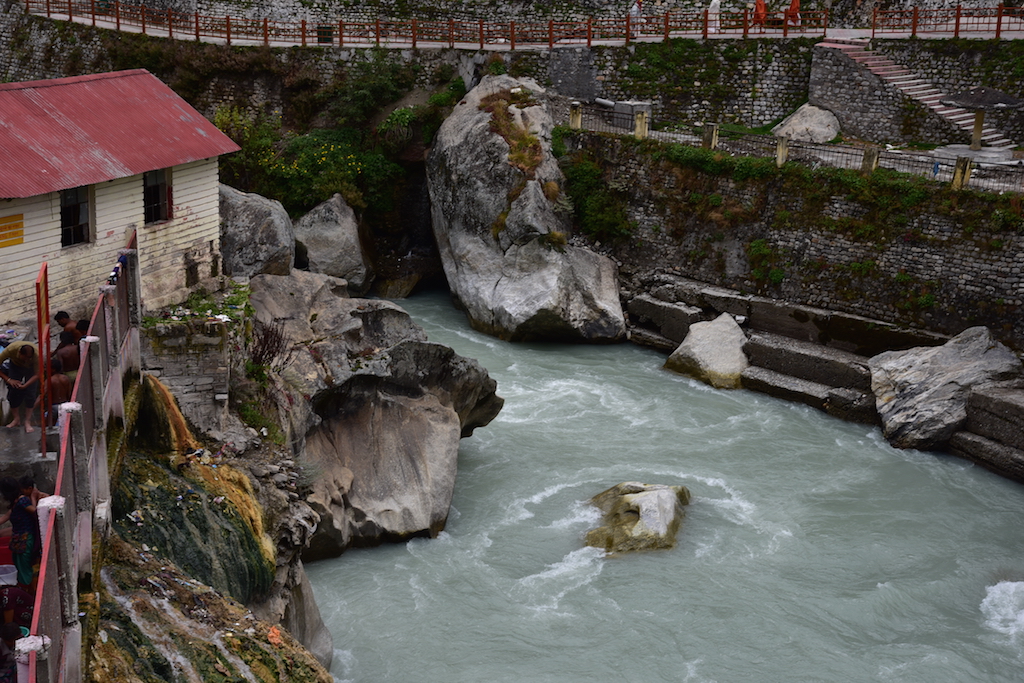
Shilas – Varaha, Nrusimha
There are Narada, Markandeya, Varaha, Nrusimha and Garuda shilas. Each of them have mythological importance.
Mana – The Last Indian Village before Tibet
After this, it was time to go to Mana which is supposed to be the last village in India. There are a lot of signboards that proclaim this information very proudly. Shop keepers have used this to their advantage by making similar assertions about their shops. (The last Tea shop in India, The last shop in India etc.)

Mana, is indeed a very small village. Like Badrinath, it is closed for 6 months a year. The denizens of this town move to lower altitudes for six months. There is no one except for the army who reside after Mana.
Mana is famous for a few spots. One is Vyas Gufa and the other one is Ganesh Gufa. These two are caves in which Veda Vyas and Ganesh resided. Veda Vyas is credited with the authoring of most of the vedas, puranas and the upanishads. He has preserved the Sanathan Dharma for posterity by authoring these books himself. But when it came to writing the Mahabharatha, Veda Vyas felt that needed help. I would not blame him. With over 100,000 slokas (each of them being a couplet) the Mahabharatha is verily the longest epic ever written. It is supposed to be four times the size of the Ramayana and ten times the combined size of both Iliad and Odyssey.
With this kind of volume in mind, Veda Vyas rightfully felt that he could do with a scribe. And who better to fill this role than Ganesh who can write as fast as he can think? So it was settled that Veda Vyas would dictate and Ganesh would write the story. But they did it in two Gufas (or caves) which are not adjacent to each other. Perhaps they communicated over ether? Who knows? But the living testament to their hard work is there for everyone to see in the form of the Mahabharatha which I frankly think is the most amazing book ever written. There is no human emotion that has been left untouched in this massive epic. It lays out the story without pre-judgement. The reader is left free to decide whether Karna is a good man or Duryodhana is a bad man or if Yudhistra is a coward. The book makes no judgements. Anyways, I am digressing. So I get to see the two gufas and the surrounding tea stalls in Mana.
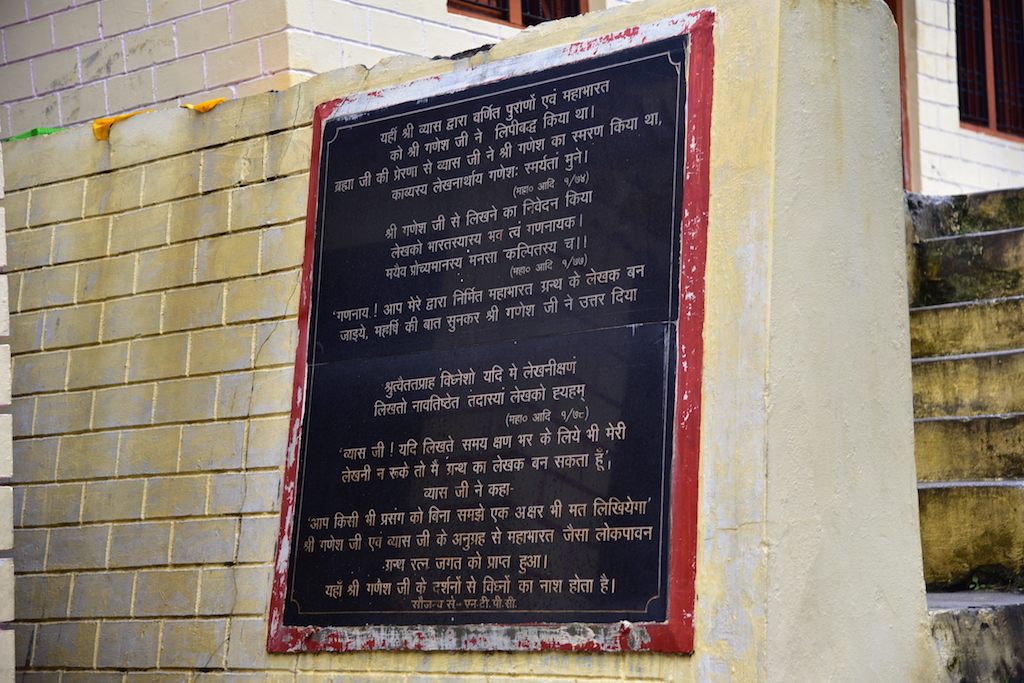
Ganesh Gufa Inscription
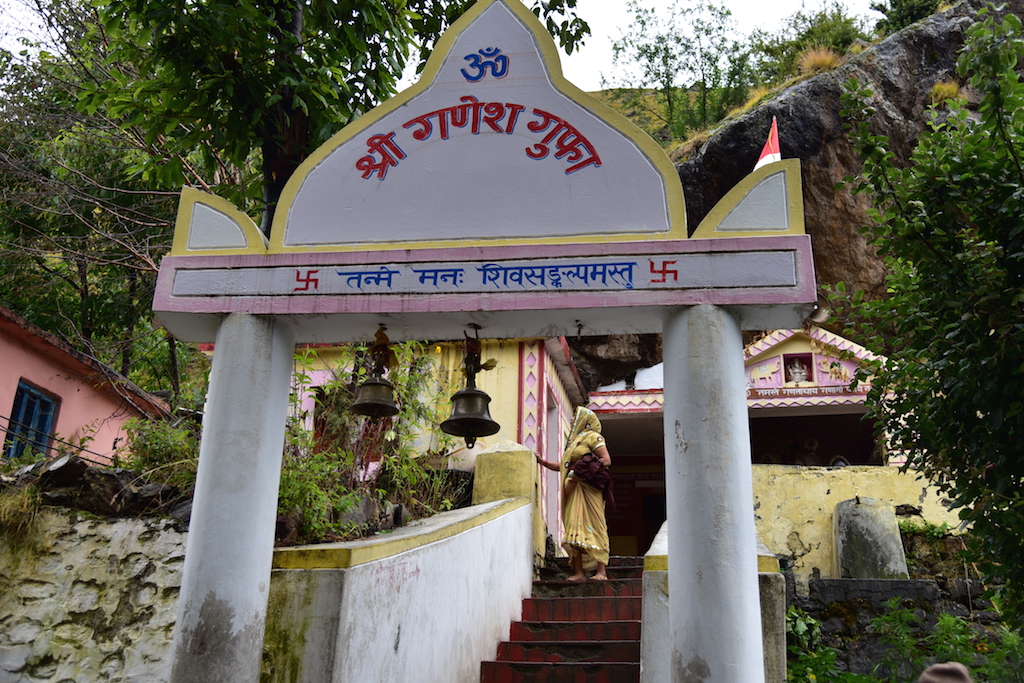
Ganesh Gufa – entrance
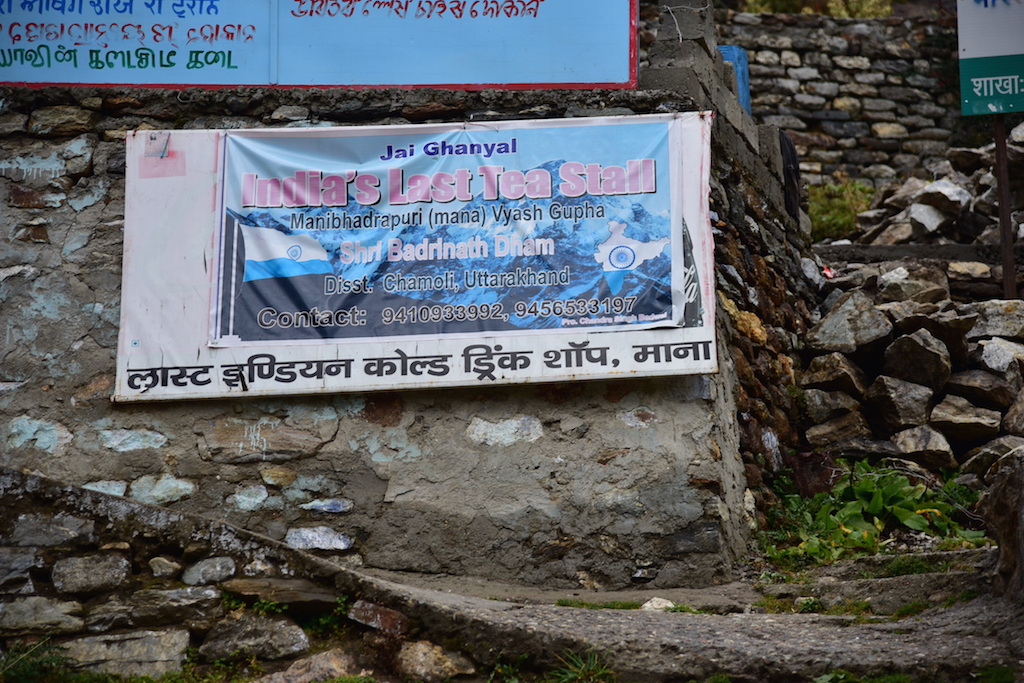
Last Tea Stall in India near Vyas Gufa, Mana
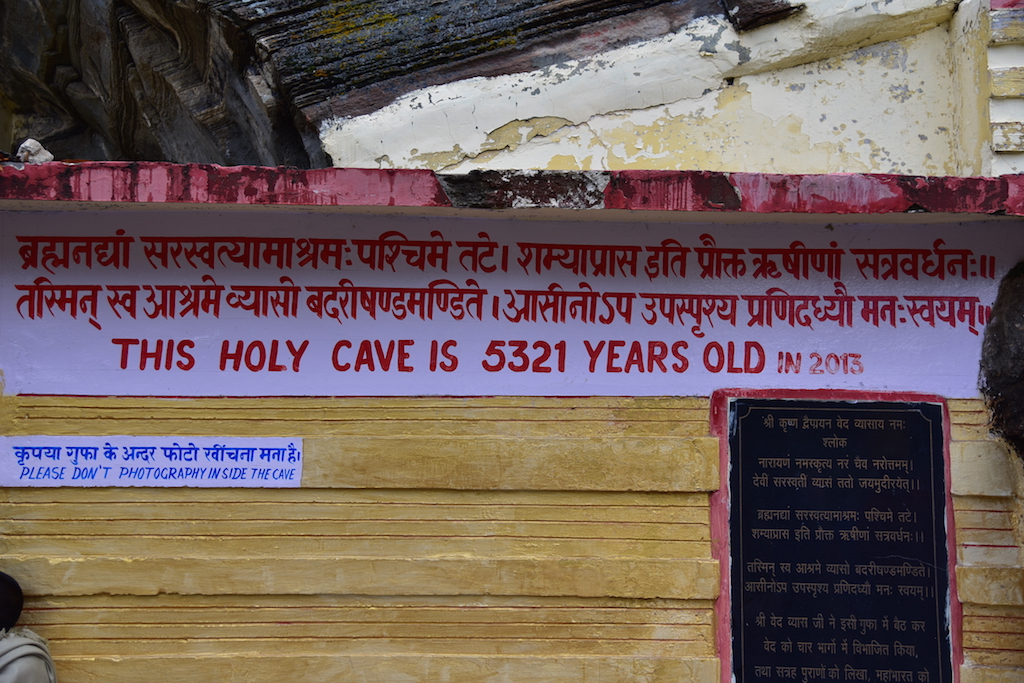
Vyas Gufa entrance
After paying obeisance to both Veda Vyas and Ganesh, it was time to explore other areas in Mana. If you go up the slope, you would find a river that is gushing down from a cave with a tremendous noise. This is the river Saraswathi which is reputed to flow under the ground for the most part only to surface for a brief space at Mana before rushing down to embrace the ever ready Alakananda. The place where this confluence happens is called Keshav Prayag which is in Mana village itself.
Keshav Prayag is not included as part of the Panch Prayags. But I was happy nonetheless to see this place of confluence. After this confluence, Saraswathi is still reputed to flow underground only to meet the Ganga in Allahabad or Prayag at the Triveni Sangam. I have other theories about Triveni Sangam which I wrote a post about in this blog elsewhere. Perhaps, that is the reason why they did not include Keshav Prayag as part of the important Prayags. If, after the confluence, Saraswathi still flows underground then what good is the confluence? Anyways let us look at some pictures now.

The Saraswathi gushing down from its cave with a lot of spraying.

Keshav Prayag – Saraswathi (left) merges with Alakananda (right and straight)
There is one last thing we need to discuss before I leave Mana. This is the episode of Swargorohan which is there at the end of Mahabharatha.
Swargarohan
The Pandavas won the Mahabharatha war as everyone knows. After ruling Hastinapur for a long time in a virtuous manner, the Pandavas and Draupadi decide to come to the Himalayas to cast off their bodies. They came to Badrinath and beyond to Mana. Then they encountered the formidable Saraswathi river which is seething with rage and is daring them to cross it. Quite clearly, a bridge was needed to cross the river and the mighty Bheema uplifts a huge rock from somewhere and puts it across as a bridge so that everyone can cross the river. This rock is present even today and is called Bheem Pul. The Swargarohan itself is a bigger story and we will reserve some space elsewhere in the blog to discuss it at length.
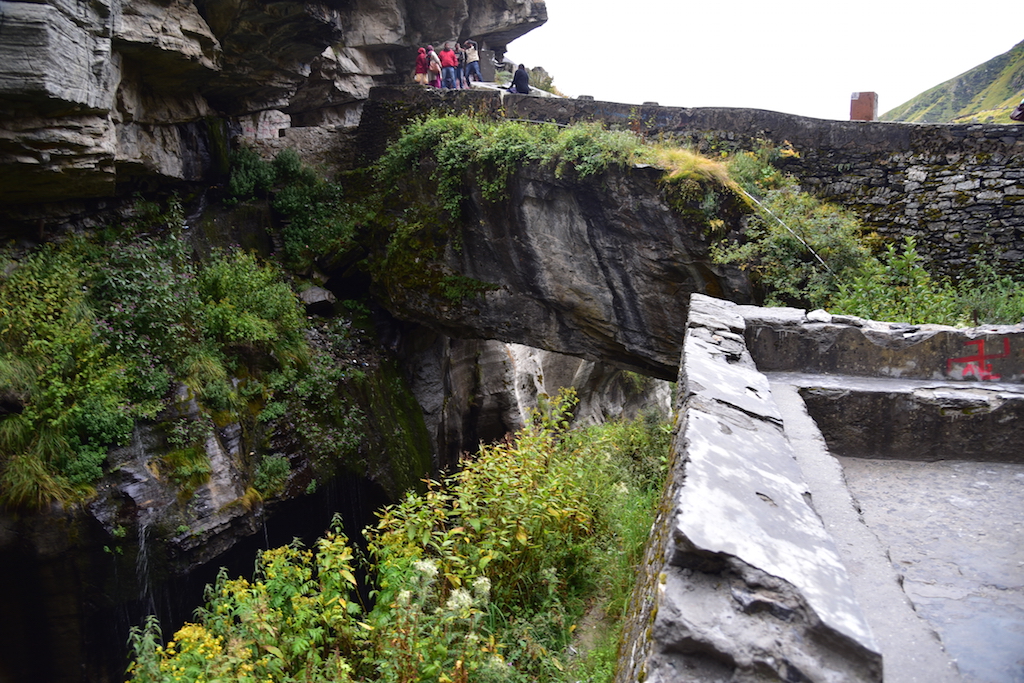
Bheem Pul – with people on top of it
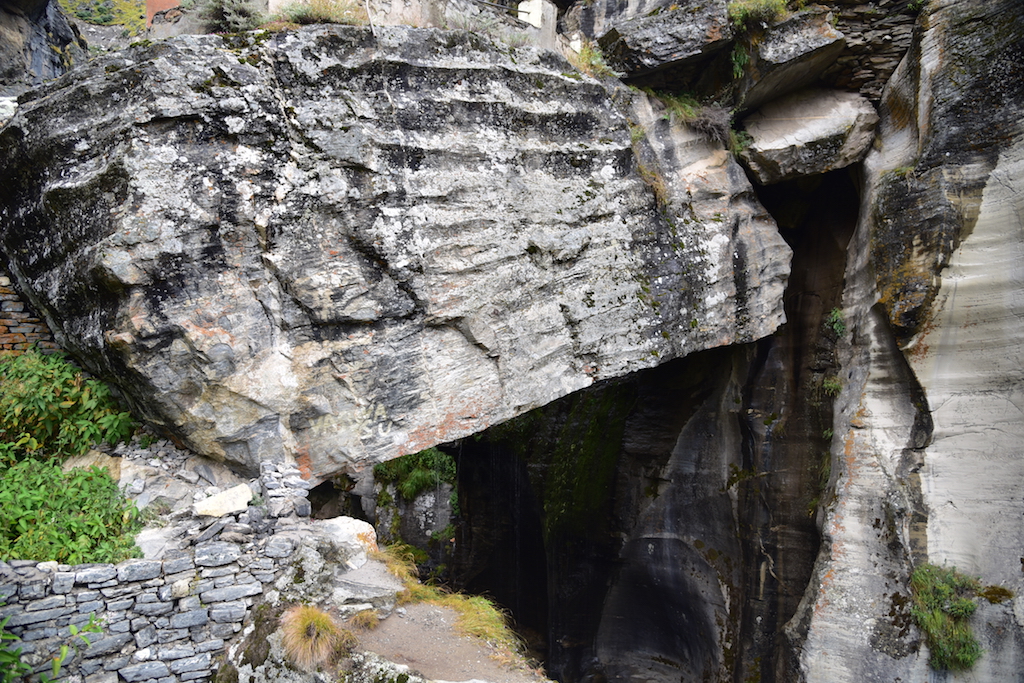
Bheem Pul – the other side
Finally, we come to the end of yet another long and rewarding day. I would have loved to proceed further to Vasundhara Falls but with the state of health that I was in, I was scared to overcommit the body. I come back to Badrinath for the night and stayed there in a set of bamboo cottages called Badriville resorts which is quite close to the Sarovar hotels there. It is a nice place with some great views from the cottages.
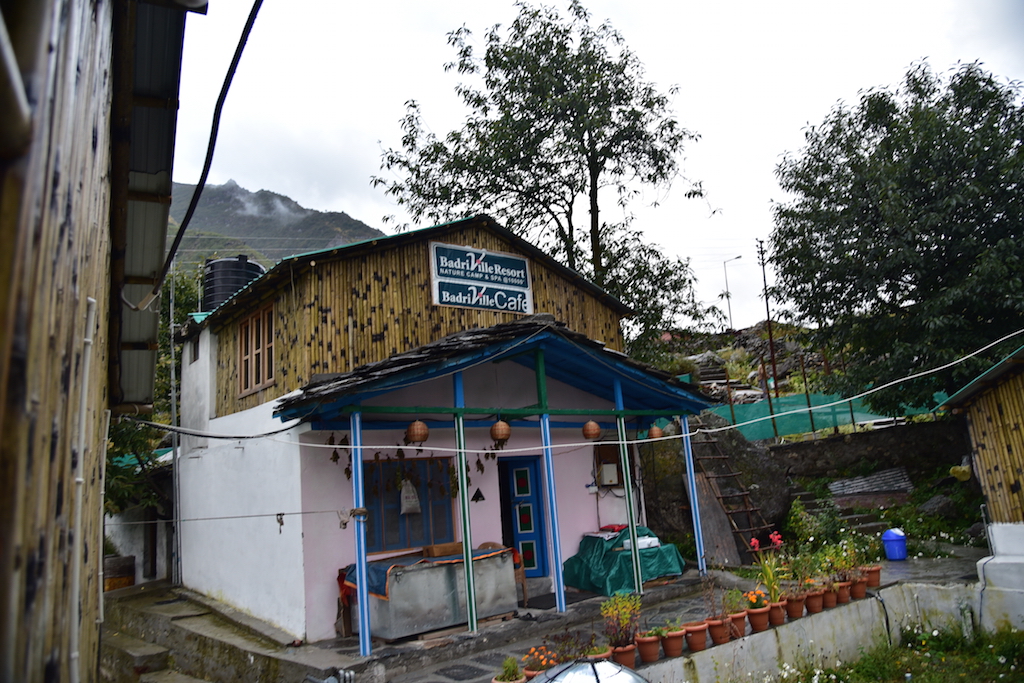
These bamboo resorts provide comfortable accommodation (though they could have been insulated better)
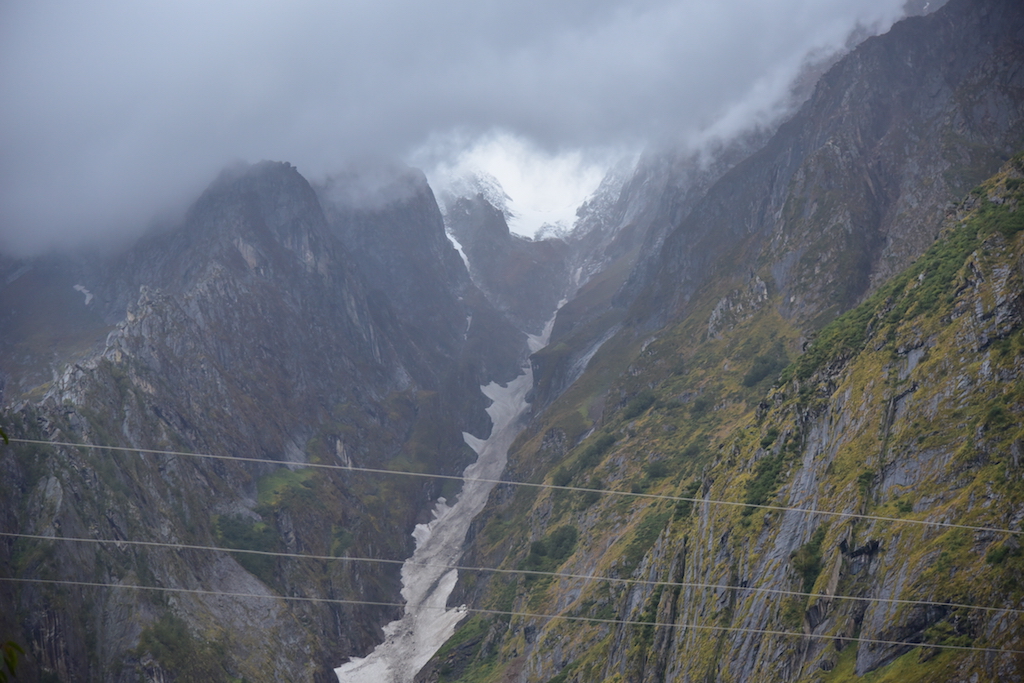
Great view of a glacier near Badrinath


